

Meet Maad Abu-Ghazalah - Libertarian Party of North Carolina Candidate for US House NC District 7
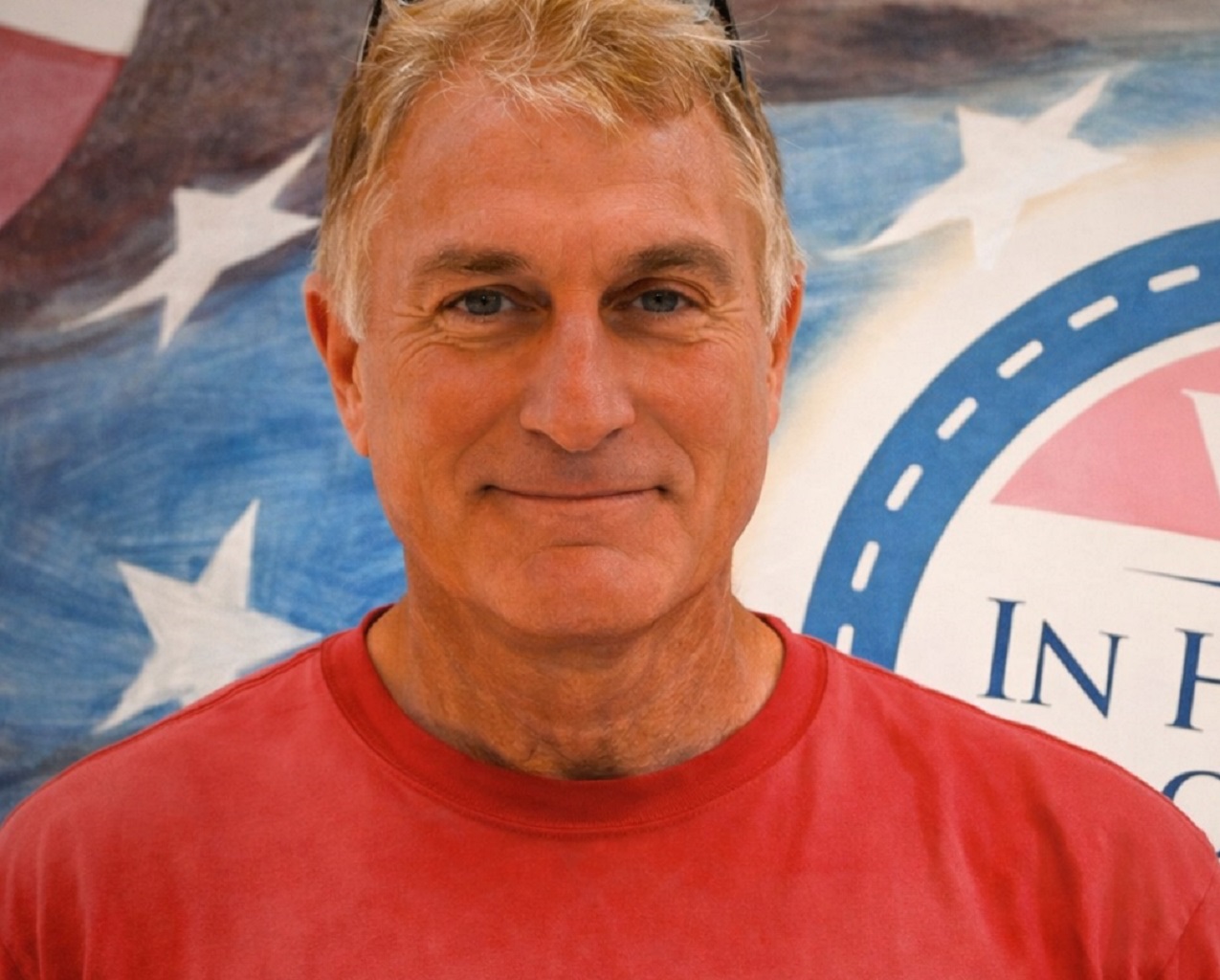
LibertyDadPod 698: Maad Abu-Ghazalah for US House
The Political Freedom Fighters Podcast: Episode 26 (Introducing Maad Abu-Gazaleh)
Liberty Blues Ep.115 Maad Abu-Ghazalah for US house NC district 7
Maad's LP National Candidate Page
Billboard Launches Maad's Bid for NC District 7
Maad Interview with the Tar Heel Libertarian:
Tar Heel: You were born in Nablus in the West Bank and grew up in Saudi Arabia before coming to the U.S. for education. How have those early experiences with occupation, conflict, and different cultures shaped your views on war, foreign policy, and the importance of civil liberties at home?
Maad: Both governments (Saudi and Israeli) were pervasive in virtually every aspect of life. The closest example I can give is like being in "The Truman Show." Even if you couldn't see them, you knew they were there...watching you to make sure you didn't do anything they disapproved of.
Regarding conflict, living under Israeli military occupation left an indelible mark on me. It's tough to live in a society when the people making the rules have already prejudged you as an enemy. What is your recourse when the highest authority is the same organization that is violating your rights? You go to school to learn how to use reason and logic to solve problems. But what do you do to convince someone when the entire system is based on brutal force?
Regarding cultural diversity, I saw both sides of that coin. I'm not a fan of the Saudi government, but, despite that, I do acknowledge that as a country, Saudi Arabia is incredibly culturally diverse. I saw people from literally every part of the globe working together to achieve a common purpose. People brought with them different strengths and weaknesses from their home country but somehow it all seemed to work.
But the other side of that coin was in the West Bank where cultural diversity was used to prejudge people and lead directly to tribalism. The Israeli’s saw Palestinians as culturally different and a threat, which inevitably lead to violence.
Finally, with respect to civil liberties, growing up in Saudi Arabia was somewhat surreal. The state decided what was socially acceptable and what was not. There was even an organization called "the morality police" that would walk in the street with a razor and cut men's hair if they felt it was too long. They would use a magic marker to blot out women's bare legs in tennis magazines, but only if the woman was attractive, and they would never blot out men's legs.
When I arrived in the US and people learned I came from Saudi Arabia, they unfairly judged me. It's true that some people internalize the norms of their society. But for me, it had the opposite effect. I feel I may be overly sensitive to what appears to be trivial violations of civil liberties because those little infractions on one’s right to express oneself are what lead, if unopposed, to the loss of one’s identity.
Tar Heel: After a successful career in Silicon Valley founding and selling a patent-law software startup, you founded the Daily Hugz animal sanctuary in Palestine. What motivated that shift, and how has running an animal rescue under occupation influenced your broader philosophy on compassion, community education, and non-violence?
Maad: For me, the meaning of life is fulfilling ones' potential. I was fortunate to have skills that were in high demand, especially in Silicon Valley, so utilizing those skills to create value was exciting to me. But, at the end of the day, I was just making money. What was more important to me was to use my skills and resources to make the world a better place. Yes, my software made life easier for people, but starting an animal sanctuary in a part of the world where animals were almost entirely neglected gave me the opportunity to actually save lives...maybe hundreds over the past ten years.
Tar Heel: You’ve spoken about rescuing and relocating dozens of dogs from the Gaza area amid war. How did that experience affect your perspective on conflict, human (and animal) suffering, and the role ordinary people can play in providing relief when governments fall short?
Maad: The experience really brought to light the difference between the government and ordinary people. I partnered with SPCA International to evacuate all 70 of the dogs from my sanctuary in the West Bank to the US soon after the October 7 war started (the evacuation took place in March 2024 but the plan started months earlier). At first, the Israeli government was very helpful because they saw it as a PR opportunity. But when we told them we weren't going to allow them to use us that way they turned against us and created a constant barrage of obstacles that made the evacuation especially challenging. For example, they required us to buy 2 sets of travel kennels. One to give to the airport security days before our departure to be inspected, and one to bring the dogs to the airport in. Then, at the airport, while our plane was waiting for us on the tarmac, we had to move each dog from the crate they came in to the crate that was inspected. Mind you, these were large feral dogs, most of whom had never been confined before. It took us about 3 stressful hours, but with the help of some volunteers we managed to get it done. But the bigger challenge was to just get to the airport at all. We were in the West Bank and the airport was on the other side of the wall in Tel Aviv. At first the government refused to allow us to cross the wall. There are a handful of gates in the wall and somehow we got the commander of one of the gates to buck that policy and allow us to pass through her gate, apparently because she was an animal lover and supported our mission. But because of the restrictions the military put on her operations, she said we had to arrive at her gate at 6 am or we would not be allowed to pass and we'd miss our flight.
Talk about pressure. If we didn't make it on time, the entire operation would be undermined, and the dogs would face the very grim prospect of being left behind at a time of war. To make matters worse, the wall was a 1 hour drive from the sanctuary.
We got a good start to our trip at sunrise, but when we approached the town where the gate was located, we discovered that the Israeli military had dug up all the roads to the town. Fortunately, we met some olive farmers in the area, and they led us through gravel roads in olive orchards around the town and to the gate, where we arrived just in time.
So yes, the Israeli government tried to make our evacuation as difficult as possible at every turn, but between the Israeli gate commander and the Palestinian olive farmers, we got the job done.
Tar Heel: As a Palestinian American who has lived under or witnessed military occupation, how do you see parallels (or differences) between those experiences and the political polarization and civil liberties issues you see in the United States today?
Maad: The Israeli military occupation of the West Bank is the embodiment of Benjamin Franklin's saying, "those who would trade liberty for security deserve neither." All the oppression in the West Bank was justified by "the need for security". The simple pleasures in life were undermined by knowing that at any moment an armed soldier might show up unexpectedly and start harassing people for paperwork or simply impose a curfew and send everyone home. And every year, the oppression got worse, to the point where now, Israel settlers are just randomly shooting people in the street unrestrained by the Israeli military.
Something happens to people when they are given weapons and told to "maintain order". When I see ICE roaming the streets with assault rifles, I can't help but flash back to my experience in the West Bank. Nothing good can come out of it.
Tar Heel: You previously ran as a Libertarian for Congress in California in 2002 and got a strong third-party showing. What lessons from that earlier campaign are you applying to your current run in North Carolina District 7?
Maad: The most important lesson I learned was to recognize that we, are in a long war not a quick battle. I never deviated from my principles, but I wish I had been more vocal about them instead of trying not to offend anyone in order to get more votes. Yes, to be elected today, your policies have to be within an Overton window. But the campaign was an opportunity to contribute my voice to the conversation, so if I'm going to muffle my voice, especially on issues that deviate from the norm, why bother running?
Your background includes both high-level tech entrepreneurship and hands-on humanitarian work. How does that combination inform the kind of representative you want to be—one who balances practical problem-solving with principled anti-war and liberty-focused positions?
I've been a political activist since the 90's. One thing I've noticed is that my patience for people who just want to talk without taking any real action has evaporated. Like in business, talk is cheap. So many people have really good ideas in business. But if you're not willing to roll up your sleeves and actually fight for your ideas in the real world, your ideas mean nothing.
Tar Heel: You’ve described yourself as the “only fiscally responsible, anti-war candidate” in the race and emphasized ending interventions that drain resources and cause devastation abroad. What specific U.S. foreign policy actions or aid programs would you prioritize ending or reforming first, and why?
Maad: Our military budget is completely out of control. I would immediately end all foreign military aid across the board. If a country desperately needs military aid to avoid a massive humanitarian crisis, they need to convince us that is the case. Instead, all I see is countries like Israel, Egypt and Jordan (the largest recipients of US military aid) taking our weapons gifts for granted and using them to solidify a status quo of violent oppressive regimes in the region.
We also have military bases in 80 countries. There is no need for them. I'd close them all and spend the money on promoting diplomacy instead.
Tar Heel: You’ve criticized the influence of foreign lobbies (including AIPAC) on U.S. policy and the acceptance of such donations by incumbents. How would you address the role of foreign lobbying in Congress while still protecting free speech and the right to petition government?
Maad: It's treasonous for a representative of the US government who is supposed to be beholden to US citizens, to accept donations from foreign agents. There are already rules to regulate foreign involvement in US elections (FARA) but somehow the Israeli lobby has skirted them. But beyond forcing AIPAC to abide by FARA, I would address the problem of foreign lobbyists the way I'd address all lobbyists. The way you get lobbyists to stop bribing our politicians is to remove their incentive for lobbying by ending government handouts to their organizations. Why would AIPAC spend hundreds of millions of dollars on political campaigns if Congress didn't vote to send tens of billions of dollars to Israel? They wouldn't. But, as long as the US government handouts to Israel are in play, the Israeli lobby has a great ROI by buying elections, like the one against Thomas Massie.
Tar Heel: As someone with deep personal ties to the Middle East, how do you navigate accusations of bias when advocating for non-interventionist policies, and what principles guide you in distinguishing between legitimate U.S. interests and endless foreign entanglements?
Maad: It's easy to disarm someone who accuses me of bias. I apply my non-interventionist principles universally. I don't and have never advocated for US government aid to any Arab country. I think all such aid is detrimental both to the US and to the recipient countries.
A legitimate US interest to me is protecting the US homeland. Instead, we have built military bases around the world then when a country attacks those bases, we use it to justify going to war with that country.
Tar Heel: You’ve called for focusing on America’s $40 trillion debt and domestic problems instead of “bombing children 10,000 miles away.” What concrete steps would you take in Congress to shift resources from foreign military aid toward domestic priorities like infrastructure, debt reduction, or veterans’ care?
Maad: I would vote against funding more military actions like the undeclared war on Iran. I would cut our military expenditures to strictly defending the US homeland and not to enforcing our military dominance overseas. Even if I wanted the US to be a military empire, which I don't, we can't afford it anyway. If Russia or China want to be military empires, let them. As long as we can defend our safety and our trade with nations, that's not our problem.
Tar Heel: Your anti-war stance aligns with classic Libertarian non-interventionism. How would you respond to critics who argue that complete withdrawal from certain alliances or aid programs could destabilize regions or harm U.S. security interests?
Maad: Like our war on poverty and our war on drugs, our "war on terrorism" has only made the problem worse. Just look at the facts. The world, and especially the Middle East, has become more unstable not less so after we decided to more actively engage in the region militarily. Nations will be more likely to deal with us peacefully if we're not bombing their civilians and infrastructure. We've turned all the good will for the US in the 70's and 80's into hatred for us because of our killing so many people abroad. We can regain the world's good will, but only if we stop killing people.
Tar Heel: In the context of ongoing Middle East conflicts, what role (if any) do you believe the U.S. should play in promoting peace, human rights, or humanitarian aid—distinct from military involvement?
Maad: Our only role is one based on diplomacy and non-violence. If two parties want to have peace, we can mediate between then. Regarding human rights, as with Bosnia and Rwanda, we should prevent outright massacres. But other than that, we shouldn't use our military to influence how nations deal with each other.
Tar Heel: You’ve highlighted protecting civil liberties like free speech at home while opposing wars abroad. How do you see the connection between endless foreign wars and the erosion of domestic freedoms?
Maad: It's an age-old strategy used by oppressive governments. Distract the people with "existential" wars overseas so they ignore the abridgement of their civil liberties at home. This is especially effective if they can tie the oppression at home to the wars overseas. The USA Patriot Act does exactly that. Passed in the immediate aftermath of 9/11, it enabled the US government to spy on virtually all domestic communications without a warrant and it was justified as a necessary tool to fight foreign terrorism. Now the law is being used to eavesdrop on citizens for actions that have absolutely nothing to do with national security.
Tar Heel: Your recent billboard campaign in Wilmington—“Americans Unite! The Bill of Rights Belongs to ALL of Us!”—uses powerful imagery of conflict and unity. What inspired this specific messaging and format, and how has the public response informed your approach to outreach?
Maad: I get triggered by government policies that are designed to pit U.S. citizens against each other. That specific billboard was a response to the militarization of ICE and their openly brutal tactics against the people. Their violence only fed the flames of division between Americans. As a libertarian, I like the concept of open borders. But, given our entitlement system, I understand that is a recipe for economic collapse. In other words, I think there are legitimate grievances on both sides of the immigration debate. Those grievances must be addressed in a civil national conversation, not by untrained, highly weaponized mercenaries.
Tar Heel: The billboard effort seems designed to cut through partisan division by appealing to shared constitutional values. How do you measure the success of this kind of visual/public messaging compared to traditional campaign events or digital outreach?
Maad: As third parties, we don't appear viable to most voters because we are not visible. What better way to say, "Hey, I'm serious about this issue" than a 20 foot billboard on a busy street. It's a way to get credibility that you are serious about your campaign. I don't necessarily think a billboard can convince any viewer to change their mind about an issue. But it does make you more credible. People came up to me and said, "you're the guy who put up that billboard!". Whether they vote for me or not...I've got their attention.
Tar Heel: You’ve been engaging the public through billboards, press, and likely social media and community events. What new outreach initiatives are you planning or have already launched, and how do they reflect your goal of uniting people around liberty rather than dividing them along party lines?
Maad: I have two new initiatives planned for the stretch run of the campaign. First, I'm going to be walking the precincts handing out flyers. The flyers target uniting the American people. My flyers highlights 3 issues most Americans agree on, regardless of political affiliation: anti-war, anti-data center subsidies, and anti-government corruption. Because the message is universal, I will not target homes or neighborhoods affiliated with any particular party since I believe the message resonates with everybody.
My second initiative is a college outreach campaign. Since the younger generation is less tied to party affiliation, and their views on the main issues track those of the Libertarian Party, I think that’s pretty low hanging fruit to get support.
Tar Heel: As a candidate with a background in both tech entrepreneurship and grassroots animal rescue/education work, how are you adapting those skills to build genuine public engagement in District 7—especially in a district that includes both urban Wilmington and more rural areas?
Maad: The skill that has served me the best is the ability to rally people from completely different backgrounds around a common cause, i.e. cleaning up our corrupt government which is beholden to its donors rather than the voters. This requires appreciating the value everyone brings to the table regardless of their socio-economic background, religion or ethnicity. As long as I can keep people focused and united on our common interests, we can have a successful campaign.
Tar Heel: Your campaign emphasizes transcending left-right divides. Can you share examples of public events, town halls, or conversations you’ve had where you’ve successfully connected with voters who hold very different views on foreign policy or domestic issues?
Maad: I decided to hand out flyers at a country music concert. To be honest, as a foreign-born American, I was more than a little anxious about handing out flyers to people in cowboy hats, big belt buckles, and high heeled boots. But you know what? It was an amazingly positive experience. Everyone was surprisingly nice and openly listened to my message. It really inspired me to know that people who have lived a completely different life experience still recognize commonality. I don't know how many of them will actually vote for someone with a name like mine. But I think I may have given them a data point that may have diverged from their stereotype. I know that experience had that effect on my view of country music listeners.
Tar Heel: Animal welfare and community education have been central to your work with Daily Hugz. Are there ways you’re incorporating similar themes of compassion, education, and non-violence into your current campaign outreach in North Carolina?
Maad: Absolutely. My campaign slogan is "Choose Life". By that, I mean to prioritize policies that are life affirming and oppose those that are life negating. I really think that resonates with most people, especially regarding the biggest issues of our time such as war and government subsidies of data centers, which not only drain our economy but destroy our environment and cost lives.
Tar Heel: In a polarized environment, how do you handle or respond to criticism or pushback during public engagements, and what does that reveal about your approach to lowering the political temperature?
Maad: Having cut my teeth as a debater in the Palestine / Israel issue, I've had to quickly learn what is effective and what is counter-productive. The worst reaction to someone you disagree with is anger. There is nothing wrong with being passionate about one's cause. In fact, you can't be genuine if you don't express your real concern about issues. But you can't approach an argument by trying to "beat" the other side. It's not about "winning". It's about revealing the truth. If one takes the posture of attacking the other side, it will just entrench the other side to defend themselves. Instead, I take the posture of trying to reveal the truth and trust that the audience (and possibly even the person I am arguing with) will come to the correct conclusions once they have been shown reality. Sometimes that works. Sometimes it doesn't. But angrily arguing against someone NEVER works.
Tar Heel: You’ve stressed that corporate and foreign lobbyists have corrupted government and that the two parties serve the same masters. How would your election change the dynamics in Congress regarding accountability, transparency, and reducing special-interest influence?
Maad: The number of votes I get is more a reflection on the voters than it is on me. The policies I've been advocating are ones most voters agree with (anti-war, anti government subsidies of data centers, and anti government corruption). But voters feel they are forced to choose the lesser evil (Republican or Democrat). These parties openly threaten their constituents by telling them, "we may be bad, but you can't afford for the other party to win". Well, if people knew they didn't have to vote for the lesser of two evils, but could choose someone they actually believed in, that would change the entire dynamics of the elections.
Tar Heel: Balancing the budget, protecting the environment (including from large data centers), and safeguarding civil liberties are recurring themes for you. Which of these do you see as most urgent for District 7 voters, and how would you build cross-partisan support for action?
Maad: In the short run, I'd have to say protecting civil liberties is more urgent. But we really can't be trapped into choosing to defend one and not the other. We can do both. The problem is that if we lose our civil liberties, we also lose our ability to fight for bigger issues like data center subsidies. If we lose our free speech rights, we lose our ability to educate people about the harm data centers do. If we lose our voting rights (e.g. by redistricting) we lose our agency to affect the changes we want. But let's not lose focus on the ultimate challenge. If life on earth becomes threatened, all of our other concerns become meaningless. I will emphasize that no party has a monopoly on defending civil liberties. It’s something that benefits us all.
Tar Heel: Your personal story—from the West Bank to Silicon Valley success to founding an animal sanctuary under occupation—embodies resilience and a commitment to helping the vulnerable. How does that lived experience shape the kind of representative you aspire to be for all constituents in District 7?
Maad: My life experience has forced me to really prioritize what's important in life. I honestly believe that true meaning and fulfilment comes from taking actions that make the world a better place. The pleasure I've gotten in my life from gaining material wealth has all been short lived. But the things I've done to try to make the world better (such as founding the animal sanctuary and campaigning to prevent the war in Iraq) have become a core part of my identity. My priority is to make the world better, whether it means solving a problem for my neighborhood or being a part of a movement to bring peace to the world, it all matters. It's all part of making the world a better place.
Tar Heel: If elected, what would success look like for you in your first term—not just in passing legislation, but in changing the tone of political discourse and demonstrating that a principled Libertarian can bridge divides?
Maad: The bipartisan squabbling in Washington has created a dysfunctional government. Both parties demonize each other in order to virtue signal to their constituents. Even though I think it's all theatrics since both parties ultimately serve the Epstein class, it creates an environment where half the government fights whatever policy is proposed by the other half. Yet, so much of our country's problems are solvable if there was a united will to do so. Right now, there is no such will. My goal would be to address each problem as it arises and not treat it as a platform to virtue signal. Government action should be about solving problems not about making sure "my side" wins.
Looking at the bigger picture, what message do you hope voters in North Carolina District 7—and Americans more broadly—take away from your candidacy regarding the possibility of unity around the Bill of Rights, ending endless wars, and rebuilding trust in public institutions?
The most important takeaway is to recognize who your enemy really is and who is your partner. The enemy is the corruption in our government - a government whose representatives are more beholden to a small number of donors than they are to the people they were ostensibly elected to serve. As long as someone like Thomas Massie, who was wildly popular in his district until AIPAC poured tens of millions of dollars into a campaign to defeat him, loses, we all lose. That's why it is so important to unite the people regardless if they consider themselves on the left or right. We are fighting against an enemy that makes no such distinction, so the only way to defeat them is if we don't let them distract us and stay united.
Showing 1 reaction